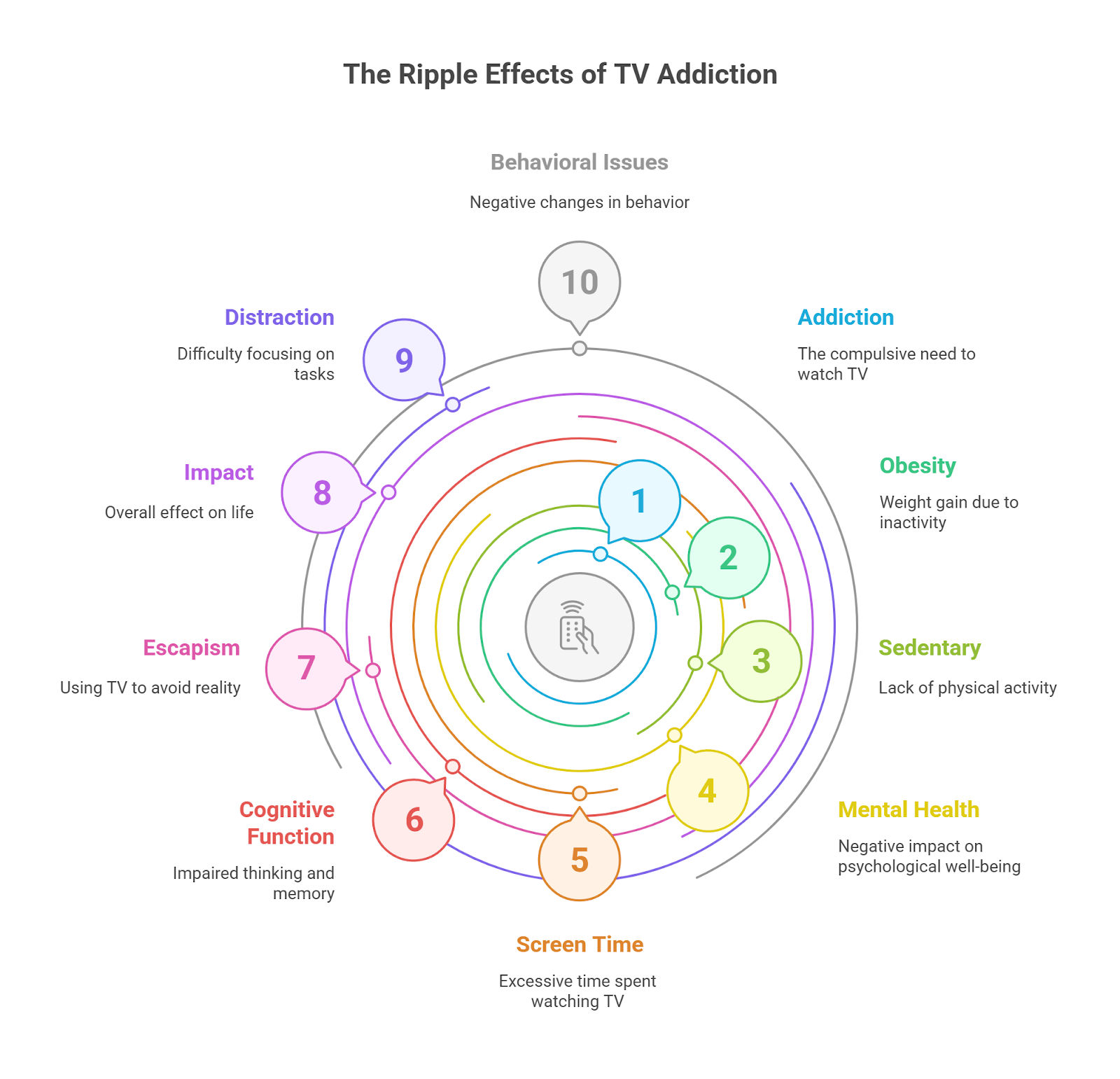
Let’s take a look at some top vocabulary words that might come up in passages on TV addiction.
1. Addiction
Definition: The state of being dependent on something, especially a substance or activity, to an unhealthy or excessive degree.
Example Sentences:
- TV addiction has become a growing concern among teenagers in many countries.
- Medical professionals warn that addiction to screen time can lead to poor mental health.
- She struggled with her addiction to video games before realizing the importance of balance.
- Social media addiction often overlaps with TV addiction due to constant screen exposure.
- Experts suggest that overcoming addiction requires a change in both behavior and mindset.
2. Obesity
Definition: Being grossly overweight is often caused by excessive food consumption and a lack of physical activity.
Example Sentences:
- Prolonged TV watching is one of the leading contributors to childhood obesity.
- The rise in obesity rates has been linked to a decrease in physical activity and increased screen time.
- Studies show that individuals who watch TV for over five hours a day have a higher risk of obesity.
- Obesity is not only a physical health concern but can also lead to mental health issues like depression.
- In some countries, the increase in obesity has been directly connected to sedentary lifestyles, including TV addiction.
3. Sedentary
Definition: A lifestyle that involves a lot of sitting and little physical activity.
Example Sentences:
- A sedentary lifestyle, coupled with excessive TV watching, can lead to long-term health issues.
- Many children today have become sedentary due to the availability of streaming services.
- People with sedentary habits are more likely to experience poor cardiovascular health.
- A sedentary routine often results in a lack of motivation to engage in physical activities.
- The rise in sedentary behaviors has sparked debates about the impact of screen time on youth.
4. Mental Health
Definition: A person's emotional, psychological, and social well-being, which affects how they think, feel, and act.
Example Sentences:
- TV addiction can harm mental health, especially among children and young adults.
- Increased screen time has been linked to higher rates of anxiety and depression, which are common mental health disorders.
- Taking breaks from screens and engaging in face-to-face interactions can improve mental health.
- Social media and television can create unrealistic expectations, harming mental health.
- Addressing mental health issues related to excessive screen time requires a multi-faceted approach, including therapy and lifestyle changes.
5. Screen Time
Definition: The total time spent in front of screens, including TVs, computers, and smartphones.
Example Sentences:
- It’s recommended that children limit screen time to no more than two hours per day.
- Studies suggest that long screen time can disrupt sleep patterns and lead to insomnia.
- Excessive screen time, particularly for watching TV, is directly linked to the increase in obesity rates.
- Parents are encouraged to monitor their children’s screen time to prevent addiction to TV and gaming.
- Many experts agree that reducing screen time can improve attention spans and cognitive functions.
6. Cognitive Function
Definition: The mental processes related to thinking, learning, memory, and reasoning.
Example Sentences:
- Research suggests that excessive TV watching can impair cognitive function, especially in young children.
- Children with limited screen time tend to have better cognitive function and academic performance.
- Activities like reading and physical play can improve cognitive function in children more effectively than screen time.
- Cognitive function can be negatively impacted by the lack of interaction with others, which is often a result of TV addiction.
- Cognitive skills, such as attention and memory, are vital for school success, and TV addiction can interfere with their development.
7. Escapism
Definition: The tendency to seek distraction and relief from unpleasant realities, often by engaging in entertainment like TV.
Example Sentences:
- Many people use TV as a form of escapism to avoid dealing with their problems.
- Excessive TV watching can be a way to escape from the stress of daily life, but it can worsen feelings of isolation.
- Escapism through TV shows or movies can help relieve temporary anxiety, but it should not become a habitual coping mechanism.
- The rise in TV addiction is partly due to the easy access to escapism provided by streaming platforms.
- While escapism can be a healthy way to unwind occasionally, excessive reliance on TV for escape can lead to negative consequences.
8. Impact
Definition: The strong effect or influence that something has on a person or situation.
Example Sentences:
- The impact of TV addiction on children's social skills can be profound, as they spend more time in isolation.
- Studies have highlighted the long-term impact of excessive screen time on physical health, particularly obesity.
- The impact of media violence on children’s behavior is a widely debated topic among psychologists.
- Research shows that the impact of TV addiction on cognitive development is more significant than previously thought.
- While TV can have educational benefits, its impact on mental health is often detrimental when viewed excessively.
9. Distraction
Definition: A thing that prevents someone from concentrating on something else; mental focus is diverted.
Example Sentences:
- TV can be a major distraction for students who need to focus on their studies.
- Distraction caused by constant TV watching is one of the reasons for poor academic performance.
- The sound of a TV in the background can be a major distraction for those trying to concentrate on reading.
- Some children use TV as a distraction to avoid dealing with emotional problems.
- Reducing distractions like TV is essential for improving focus and productivity.
10. Behavioral Issues
Definition: Problems related to the way someone acts, often causing social or academic difficulties.
Example Sentences:
- Excessive TV watching can lead to behavioral issues, such as aggression or difficulty following rules.
- The more time children spend watching violent TV shows, the more likely they are to display behavioral issues.
- Teachers often notice behavioral issues in students who watch a lot of TV before school.
- Behavioral issues in adolescents can stem from a combination of factors, including media consumption.
- It is important to address the root causes of behavioral issues, such as TV addiction, to improve overall well-being.
As you work through sample passages, try incorporating these words into your responses to demonstrate your command of the topic.
Also Read: Common Spelling Mistakes in IELTS – Details inside!
Now that you're equipped with key terms, let’s highlight common pitfalls in reading, writing, and speaking, and offer practical strategies for overcoming them.
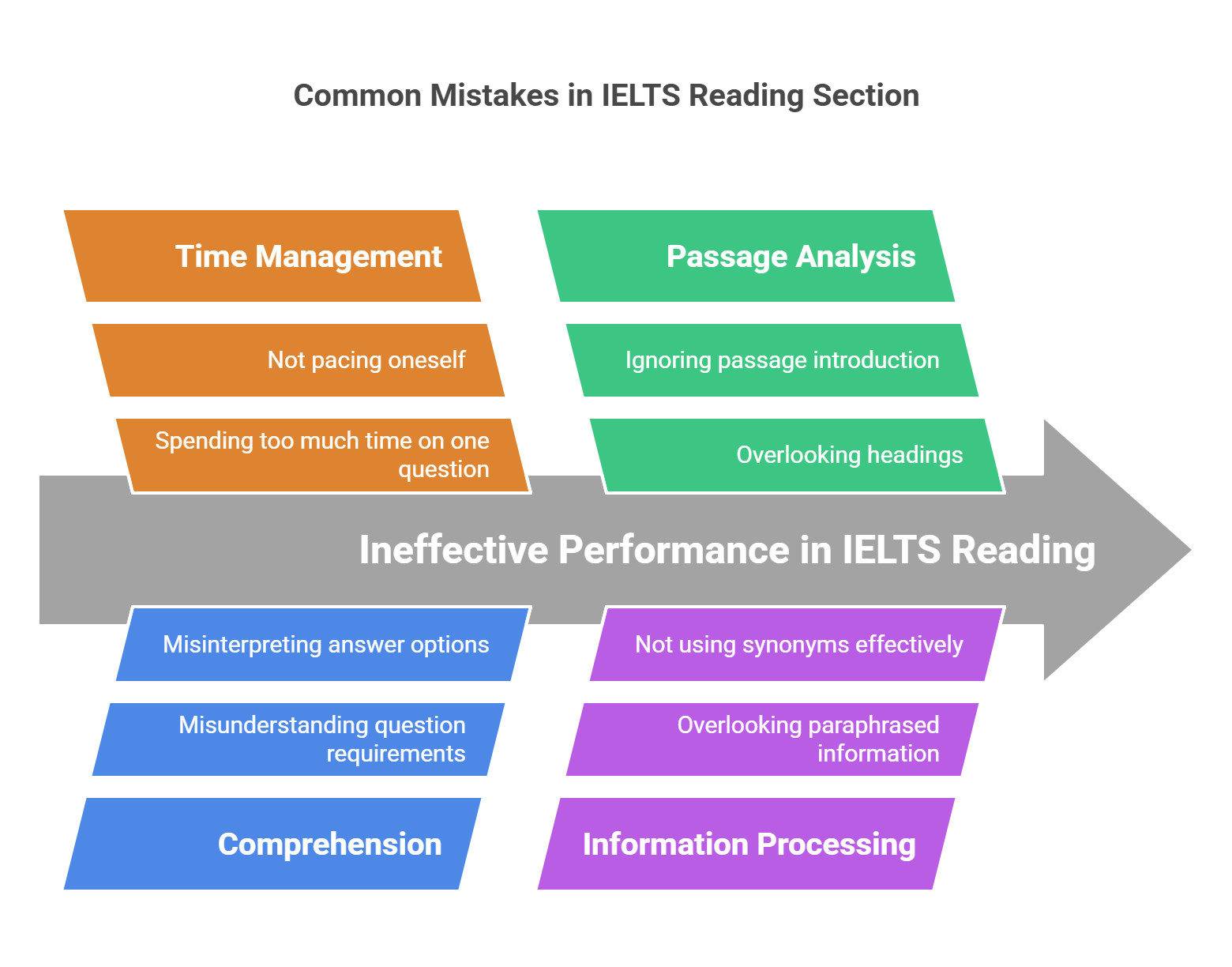
Common Mistakes to Avoid Along with Helpful Tips
When understanding the IELTS exam pattern of the reading section, it's easy to fall into certain traps that can hinder your performance.
Whether you're new to the exam or have taken it before, avoiding common mistakes can significantly affect your overall score. These mistakes often stem from misunderstandings of how the exam works, time mismanagement, or simple misinterpretations of the questions and passages.